
Preserve Your Jerky: 6 Effortless Methods for Long-lasting Goodness
Maybe you’ve just come across a killer deal on bulk beef that would be perfect for turning into jerky.
Perhaps one of your jerky-loving friends has surprised you with a gift of gourmet homemade jerky that you want to save for a special occasion.
Or it’s possible that you’re just trying to plan for the future and build up a cache of emergency food that might not be needed for a long time to come.
Whatever the situation, you’re concerned about the shelf life of your jerky and want to extend it as long as you can — ideally, years.
Is this just a pipe dream? Or can you really prepare and store your jerky in such a way that it’ll still be safe — and enjoyable — to eat years from now?
Good news: it’s a totally accomplishable goal… and it’s a lot simpler than you might think. Read on to learn the secrets to extending your jerky’s shelf life farther than you knew it could go.
6 Tricks and Tips for Making Your Beef Jerky Last for Years
1. Always Start with Lean Meat
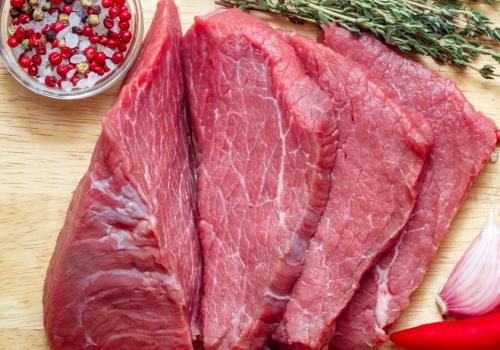
Fat is the jerky lover’s enemy for so many reasons, primarily the effect it has on jerky’s shelf life.
When fat is exposed to air, it undergoes a chemical reaction that changes its taste, smell, and texture for the worse. If you’ve ever bitten into a piece of jerky and tasted something rancid, it was probably a bit of fat that oxidized and spoiled.
Spoiled fat isn’t just unpleasant to eat. It’s also potentially dangerous: mold loves to grow on fat, and its growth is accelerated by the same oxygen that makes the fat go rancid.
Fat in jerky isn’t a huge deal if the jerky is consumed within a day or two. But if you want to store your jerky long-term, make sure you start with lean meat and remove as much remaining fat as you can.
If you’re making beef jerky, opt for super-lean cuts like the eye of round, top round, bottom round, or sirloin tip. Alternatively, you can try making jerky from other kinds of meats that are naturally low-fat, such as venison, turkey, or fish.
2. Cure Your Jerky the Right Way
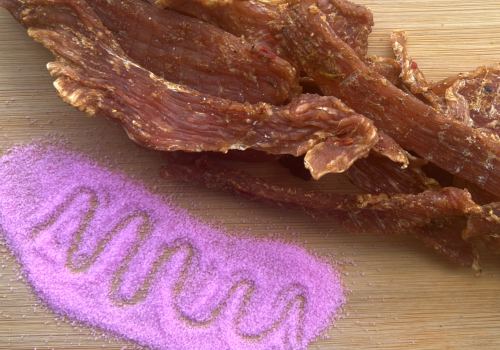
Curing your jerky isn’t strictly necessary if you’re going to eat it quickly. But it’s absolutely essential to do it — and do it right — if you want your jerky to last for years.
Most homemade jerky is cured with curing salt, such as Prague Powder #1. It’s a combination of salt and sodium nitrite, a compound that’s highly effective at warding off bacterial and fungal growth.
You need very little curing salt to make your jerky safe. The exact amount varies by brand, but 1 teaspoon of Prague Powder #1 is enough to cure 5 pounds of meat.
It’s possible to cure your jerky by other means, such as celery powder, but the effect is less predictable and harder to control. If you’re serious about storing your jerky for years, purpose-made curing salt is the way to go.
3. Take the Time to Properly Dry and Cool Your Jerky
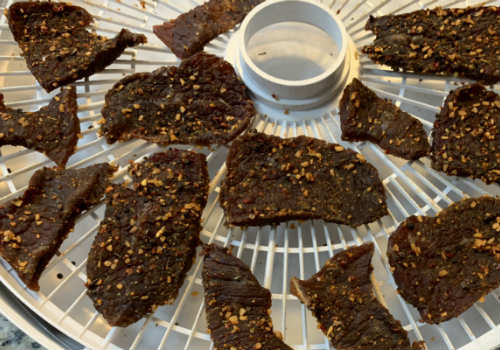
Generally, the less moisture a food contains, the longer it lasts.
That’s good news for jerky fans: with jerky, the dryness is the point!
The dehydration process removes most of the moisture from the jerky. When it’s finished, its moisture content should be 20% or less — you’ll be able to tell when you can use light pressure to bend a piece without it breaking or cracking.
But don’t put it away just yet! Your jerky needs to cool completely before going into storage.
Moisture continues to evaporate as the jerky cools, but if the jerky is sealed in a bag or container, it has nowhere to evaporate into and will get reabsorbed by the jerky. Always let your jerky cool to room temperature before you put it in its container.
4. Use Oxygen Absorbers or Desiccants in Your Jerky Container

- Packets remove oxygen from suitable sealed food-storage containers.
- Ten-per-pouch packaging lets you open a smaller group at a time.
- Included oxygen indicators help you check the condition of unopened packaging.
Inexpensive and convenient, oxygen absorbers and moisture-absorbing desiccants help you regulate your jerky’s environment and make it last longer. Just pop a packet in with your jerky and let it work its magic.
Which one should you choose? The answer depends on where you live and where you’ll be storing your jerky.
If humidity is a concern, a desiccant is a way to go. Any excess moisture in the air will be absorbed by the silica gel in the packet.
But if your home tends to be dry, a desiccant may dry your jerky out too much. In this case, you’ll be better off with an oxygen absorber, which sucks up any stray oxygen molecules and suffocates any bacteria trying to colonize your jerky.
Oxygen absorbers need a little moisture to work, so they shouldn’t be used alongside desiccants — the effects aren’t compatible.
However, if you’re storing your jerky in a large container like a jar, you can place the desiccant at the bottom, add the jerky, then place an oxygen absorber on top. They’ll be far enough away from each other that they’ll still be effective.
5. Vacuum Seal Your Jerky
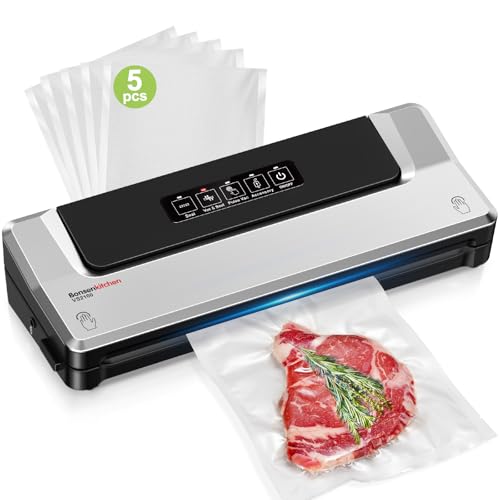
- Pulse mode lets you control suction when packaging softer foods.
- One-touch vacuum and seal mode simplifies routine bag sealing.
- Compact, lightweight body is easy to put away between meal-prep sessions.
Perhaps the most effective way to extend your jerky’s shelf life is to vacuum seal it.
Vacuum sealing removes every last bit of oxygen from your jerky’s bag, preventing microbial growth for years — as long as the bag remains sealed.
If you’re not already set up to vacuum seal, there’s a bit of an investment required: you’ll need to purchase a vacuum sealer and bags. But you don’t need the fanciest model to effectively seal your jerky, and you can find basic vacuum sealers for around $50.
And if you really want to make your jerky last for years, combine vacuum sealing with our next tip…
6. Store Your Jerky in the Freezer
By far, the best way to ensure that your jerky will remain good for years to come is vacuum sealing it and then freezing it.
Freezing causes most microbes to go dormant, preventing them from growing or spreading. It also causes the molecular activity to slow, so the various nutrients and flavors in the jerky remain intact.
But simply sticking your jerky in a zip-lock bag in the freezer can lead to freezer burn. As the remaining water in the jerky freezes, it gets sucked out of the jerky and into the surrounding air, forming ice crystals and over-dehydrating the meat.
Freezer-burned jerky is still safe to eat, but its taste and texture will be strange.
That’s why it’s advised to vacuum seal your jerky before freezing it: without any air in the package, the water in the jerky can’t evaporate out of it.
Combine these tips and tricks, and you’ll be enjoying your jerky for years — that is, if you don’t snack too hard on it over the coming weeks!
Jerky for Survival Preps: Shelf Life, Storage, and Uses (Video)
QUOTE:
"You might be a redneck if you think that beef jerky and moon pies are two of the major food groups."
How to Vacuum Seal Your Jerky (and 5 Reasons You Should)
Lifespan of Jerky: How Long Can You Expect It to Last?

About the Author
Charles Joseph
In 2017, a good friend introduced me to the most amazing beef jerky I had ever tasted. And his source was from the most unexpected of places--a random guy in Thailand whom he had met while living there. Although I had been eating jerky since as far back as I could remember, I was genuinely blown away by the flavor. I realized the best beef jerky doesn't come from a store. This experience inspired me to create Beef Jerky Hub and put into writing all the things I've since learned about this amazing food. If you're interested, you can read more about my story here.