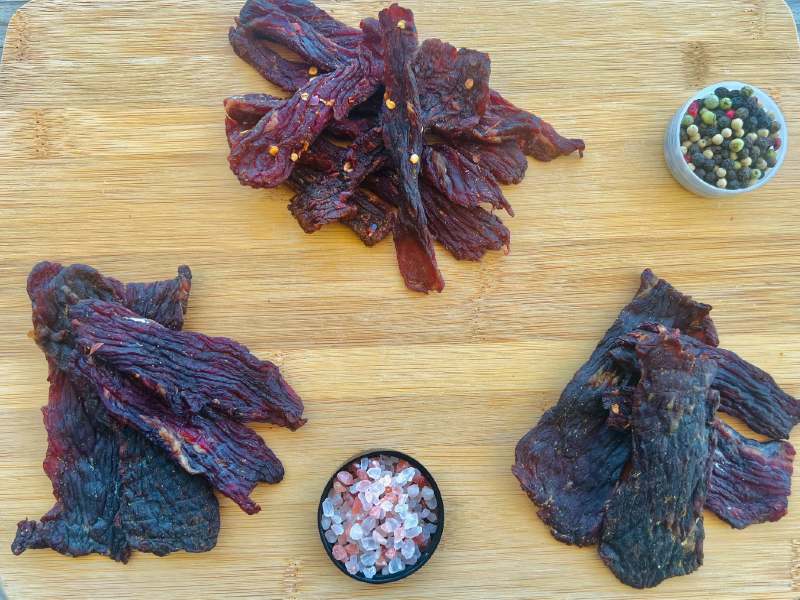
Imagine you’re heading out on a camping trip and psyched to bring along some of your homemade beef jerky. Its lightweight nature will make it the perfect snack to throw in your day pack, and that meaty protein will do wonders to refuel you after a long hike.
But you’ll be exposed to a lot of elements on your trip: sun, wind, water and various other bits of nature. And that means your jerky will be exposed to them as well.
So what’s the best way to store your beef jerky for camping, backpacking, hiking, and other outdoor activities? And why is it so important to get it right?
Keep reading — you’re about to become an expert on bringing beef jerky to the great outdoors!
Why Is It Important to Store Beef Jerky Properly When Outdoors?
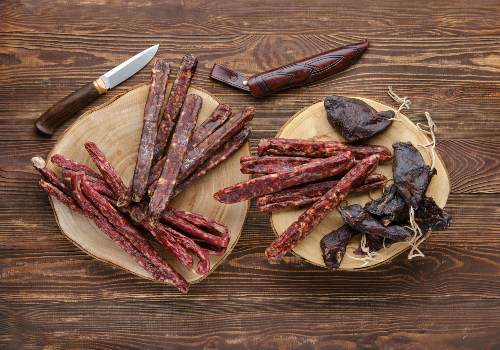
When storing beef jerky at home, the environmental conditions remain pretty stable. Temperature, light, and moisture levels don’t fluctuate much, and there aren’t as many different microorganisms floating around in the air as outside.
All of that changes when you bring your beef jerky backpacking or camping. Let’s take a look at how — and why.
Sunlight and Heat Can Affect Your Beef Jerky’s Taste and Nutrition
The sun’s intense heat will dry and dehydrate anything left under its blazing rays — and if that happens to be your jerky, it could render it so dry as to be inedible.
And shielding it from light isn’t enough. Even if your jerky is tucked away in your dark backpack, it’ll still heat up and dry out if the backpack itself is exposed to the sun.
Your jerky won’t just lose its texture in the sun: it’ll lose its beauty, taste, and nutrition, too. The process of photodegradation — or food spoilage due to light — causes discoloration, shriveling, loss of vitamins, destruction of proteins, and flavor reduction.
In other words, the sun and its fiery heat will ruin everything you love about beef jerky.
Moisture Can Change Your Jerky’s Texture and Encourage Mold Growth
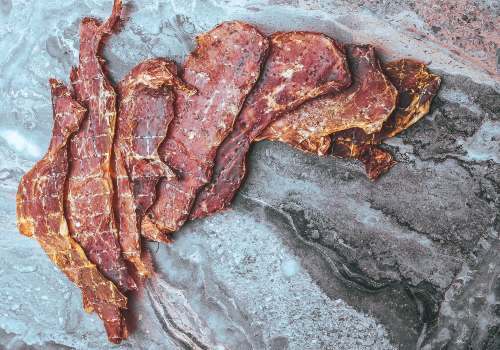
Moisture is possibly beef jerky’s greatest enemy. After all, in order to make jerky, to begin with, you need to remove most of the moisture from the meat — and allowing it back in is a recipe for disaster.
If it starts to rain and a few droplets get sealed in with your jerky, the humidity in the container will rise rapidly. And cracking that container open for a quick bite on a misty morning will only boost the humidity even further.
Your jerky will begin to absorb that moisture, making it chewier and gummier. More concerningly, it’ll also make your jerky a breeding ground for microscopic mold spores.
Mold loves moisture and only needs a tiny bit to start multiplying. The next time you reach for your jerky, you might find it covered in fuzzy white spots that could very well make you sick — and when you’re in the middle of nowhere, that’s the last thing you need.
Air Exposure Can Introduce Bacteria and Other Pathogens to Your Jerky
Wild plants and animals are what draws many of us to the great outdoors, but there’s much more life out there than meets the eye.
Millions of microscopic pathogens float through the air: bacteria, fungal spores, viruses, and various other microbes. Some of these are the same ones found everywhere, including our homes, but many others are only encountered in nature — and they’d love to try some of your jerky!
That cooling breeze blowing across your face while you take a jerky break on your hike is also blowing these microbes into your jerky container. And if you don’t seal your jerky perfectly when you’re done eating, that little air gap will continue to let more pathogens inside.
Keeping Jerky Fresh While Camping: 4 Storage and Preparation Tips
Trim as Much Fat as Possible from Your Jerky
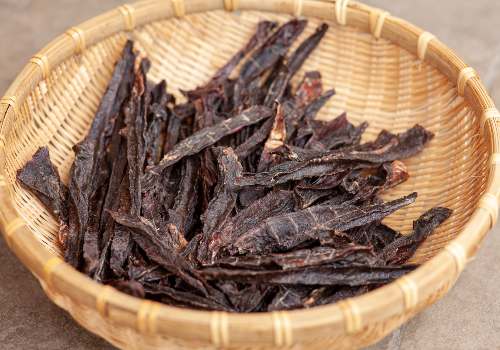
Making your jerky last longer outdoors starts in the kitchen: thorough fat trimming is essential to prevent spoilage and ensure a satisfying texture.
Fat spoils quickly because it reacts quite volatilely with oxygen. After air exposure, the fatty acids break down and react with other nutrients in the jerky, making them less nourishing and imparting an odd taste.
And even if that weren’t the case, nobody likes biting into a piece of jerky only to feel their teeth sink into a glob of fat.
So start with the leanest beef possible, then trim as much extra fat as you can. It’ll make your jerky better in nearly every way.
Use Multiple Layers of Protective Storage
Keeping air, moisture, and light away from your jerky is paramount when heading outdoors. A single resealable bag might not cut it — if it tears or isn’t sealed all the way, that’s it for your jerky.
Instead, place your jerky in a paper bag, then put the paper bag in a plastic resealable bag. The paper shields your jerky from the sun and absorbs moisture, while the resealable bag minimizes the amount of oxygen the jerky is exposed to.
And if the extra bulk isn’t an issue, placing that double-bagged jerky in a mason jar will add yet another layer of protection to your precious cargo.
Toss In a Desiccant or Oxygen Absorber
A little packet of silica desiccant can go a long way towards preserving your jerky while backpacking. It’ll absorb moisture and keep humidity levels in your jerky container stable.
Alternatively, you can use an oxygen absorber, which does the same thing but with that pesky oxygen that threatens to spoil your jerky.
These low-tech solutions add very little bulk and go a long way towards making your jerky last longer outdoors.
Vacuum Seal Your Jerky in Individual Servings
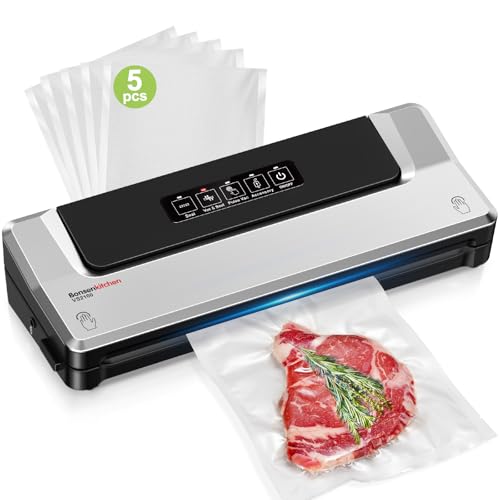
- Pulse mode lets you control suction when packaging softer foods.
- One-touch vacuum and seal mode simplifies routine bag sealing.
- Compact, lightweight body is easy to put away between meal-prep sessions.
If you have a vacuum sealer, you can seal your jerky in single servings, so it isn’t exposed to any air or moisture until it’s about to be eaten.
And if you use opaque vacuum sealer bags, this trick can also protect your jerky from the sun. It’s the snack pack triple attack: protection from air, water, and light all at once!
When you’re hungry, just tear open a single portion and enjoy. The rest of your jerky will remain sealed away from the elements with no risk of contamination or condensation.
Bonus: since there’s no air in the vacuum-sealed packs, this is perhaps the most compact way to store beef jerky for your next backpacking, camping, or hiking trip. Saving space and preserving your jerky — it doesn’t get any better than that!
Jerky for Survival Preps: Shelf Life, Storage, and Uses (Video)
QUOTE:
"You might be a redneck if you think that beef jerky and moon pies are two of the major food groups."
How to Vacuum Seal Your Jerky (and 5 Reasons You Should)
7 Reasons to Include Jerky in Your Emergency Survival Kit
About the Author
Charles Joseph
In 2017, a good friend introduced me to the most amazing beef jerky I had ever tasted. And his source was from the most unexpected of places--a random guy in Thailand whom he had met while living there. Although I had been eating jerky since as far back as I could remember, I was genuinely blown away by the flavor. I realized the best beef jerky doesn't come from a store. This experience inspired me to create Beef Jerky Hub and put into writing all the things I've since learned about this amazing food. If you're interested, you can read more about my story here.