
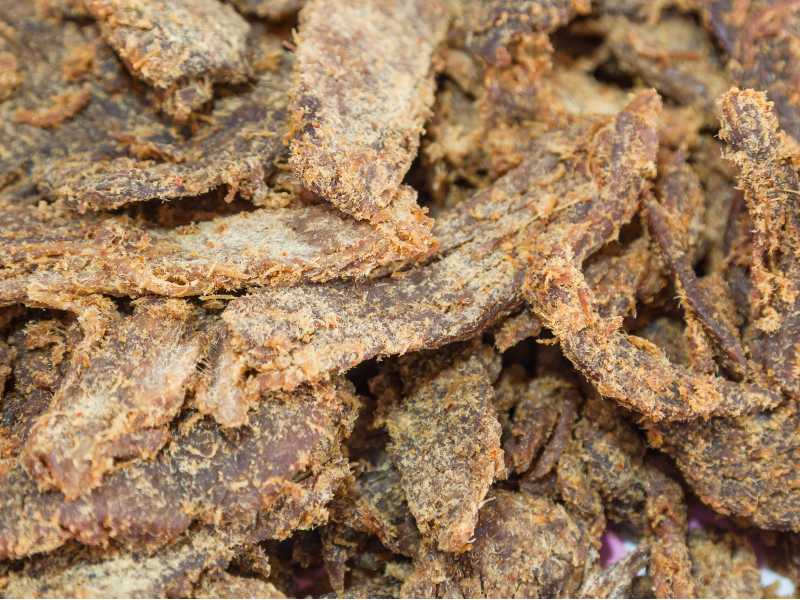
It’s every beef jerky lover’s worst nightmare: all day long, you’ve been looking forward to chowing down on some of your incredible homemade jerky.
But when you open the container, you see some fuzzy white spots on your jerky, and your heart sinks. Your beef jerky has gotten moldy somehow, and now eating it is out of the question.
Luckily, preventing your beef jerky from going moldy is a lot simpler than you might think. Read on to see why these precautionary measures are so important, then learn our 4 top tips for mold prevention.
Beef Jerky and Mold: 5 Questions, Answered
Why Does Beef Jerky Get Moldy?
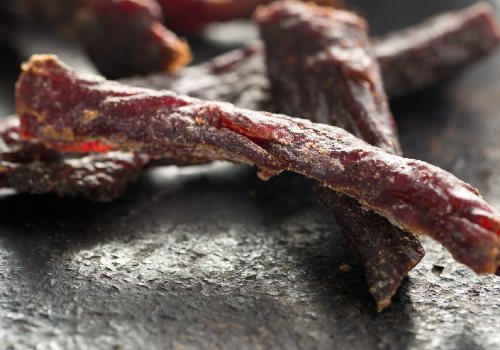
Mold spores are microscopic, and they’re pretty much everywhere. But they’ll only settle down and start growing if the proper conditions are met.
Warmth, moisture, humidity, and oxygen exposure all contribute to mold growth. The more of these conditions are met, the more likely your beef jerky is to mold.
If there’s too much moisture in your jerky, or if you put it in a sealed container before it’s cooled, mold growth is practically inevitable. Ditto if your jerky isn’t stored in an airtight container — especially if you live in a humid climate.
Beef jerky can also get moldy if it’s handled with dirty hands or if its container is repeatedly opened and closed in an unclean environment.
How Can I Tell if My Beef Jerky Is Moldy?
Not all white spots on your jerky are mold.
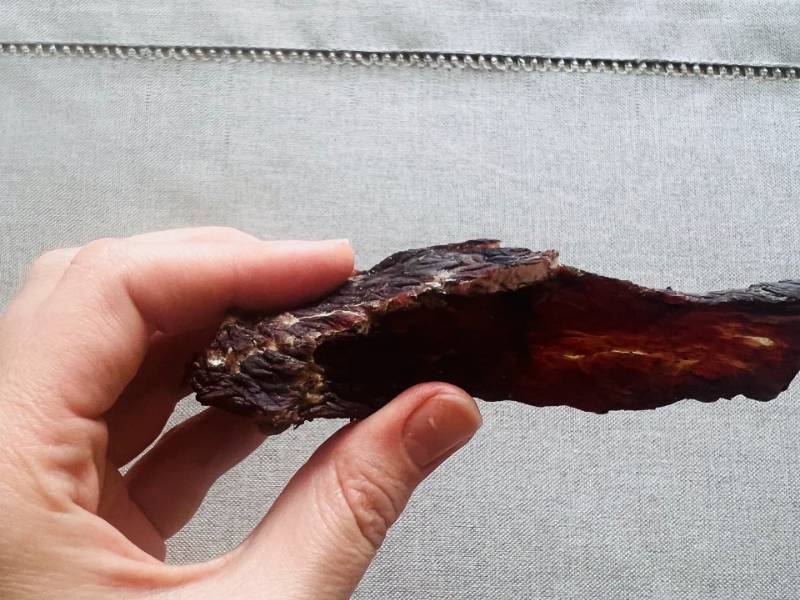
If you see smooth, shiny white spots on your jerky that can be easily wiped away with a finger, you’re merely dealing with excess fat globules, not mold. These spots can be wiped off or rubbed into the jerky — either way, they’re nothing to worry about.
It’s the same for white spots that resemble fine powder or crystals. These white spots are salt deposits that emerge on the jerky as it dries, and they’re perfectly normal and harmless.
The telltale sign of moldy jerky is the presence of fuzzy white, green, or gray spots. If you look closely, you’ll see a fine, fibrous texture similar to a thin, dense spiderweb, and your nose may pick up on a musty odor.
What Happens If I Eat Moldy Beef Jerky?
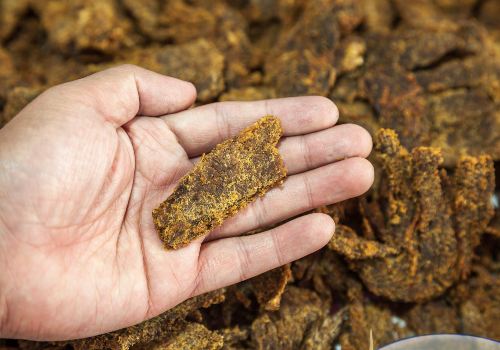
The consequences of eating moldy jerky depend on the exact type of mold, the amount you consumed, and your overall health.
Some types of mold will cause only minor symptoms, like brief queasiness or stomach discomfort. If you only ate a tiny bit, you might not have any symptoms at all.
But if you ate a lot of moldy jerky, have other health issues, or got unlucky with a particularly toxic species of mold, your symptoms could be severe.
Elevated body temperature, vomiting, diarrhea, shortness of breath, or severe headache can be signs of a serious reaction to mold ingestion. If you experience these symptoms after eating moldy jerky, speak to a medical professional as soon as possible.
What Should I Do if My Beef Jerky Molds?
Moldy jerky can’t be salvaged and will need to be thrown out.
Yes, it’s possible that the mold that’s present on your jerky is a more benign variety that won’t harm you if you eat it. But unless you’re a mold expert with a home laboratory, it’s impossible to tell exactly which type you’ve got — and the risk just isn’t worth it.
What If Only Some of My Beef Jerky Is Moldy?
If only a piece or two of your jerky has mold on it, you might be tempted to toss the bad bits and keep the rest of the batch.
But jerky is porous, so it’s highly likely that even the pieces that aren’t visibly moldy are harboring hidden mold spores. And it’s only a matter of time before they, too, sprout those unfortunate fuzzy patches.
If you see any mold on your jerky, throw away the whole batch. It’s sad, but trying to save it might end up making you sick, so play it safe and protect your health!
4 Ways to Prevent Mold on Beef Jerky
Properly Dry and Cool Your Jerky Before Storing It
Drying jerky can take a long time, but don’t rush the process: reducing it to the proper moisture level is critical for mold prevention.
The softer the jerky, the more moisture it contains, so fans of tender jerky need to be especially vigilant about mold. If you’re not drying your jerky to the recommended moisture level of 5-10%, make sure you utilize our other mold prevention tips to keep your jerky safe.
It’s also important to let the jerky cool fully before storing it. Any residual heat trapped in the container will encourage mold growth.
Store Your Jerky in an Airtight Container

- Dry-erase lid lets you record dates directly on the container.
- Silicone seal helps contain food odors in the refrigerator.
- Dishwasher-safe container reduces cleanup after storing deli foods.
Mold needs oxygen to grow, so airtight jerky storage is a must.
Vacuum sealing is the best choice: it guarantees minimal oxygen and an inhospitable environment for mold.
If you’re not vacuum sealing your jerky, glass containers with an airtight seal, such as mason jars, are a great option. Because glass is non-porous, even if your jerky does mold, you’ll be able to sanitize and reuse the container.
Plastic, on the other hand, will absorb mold spores readily. It’s impossible to fully remove mold from plastic containers, so if your jerky molds, you’ll need to toss the whole container.
Use a Desiccant or Oxygen Absorber

- Packets remove oxygen from suitable sealed food-storage containers.
- Ten-per-pouch packaging lets you open a smaller group at a time.
- Included oxygen indicators help you check the condition of unopened packaging.
When you buy jerky from the store, you’ll find desiccant packets in the bag. These packets absorb moisture, making it much harder for mold to grow on the jerky.
You can use these packets for your homemade jerky as well. Just toss a fresh one into the container with your jerky and seal it up.
Oxygen absorber packets are another option. They resemble desiccant packets but absorb oxygen rather than moisture, so they’re great for those who like tender jerky and don’t necessarily want to remove more moisture from their batch.
Freeze Your Jerky if You’re Storing It Long-Term
Jerky can be stored at room temperature if it’s eaten within a few months. And if it’s properly dried and sealed, it can last even longer without refrigeration or freezing.
But if you’re storing your jerky long-term and want to play it safe, seal it up and stick it in the freezer. Mold can’t grow at freezing temperatures, so it’s the surest way to make your jerky last.
However, freezing won’t kill mold that’s already present in the jerky — and once it’s thawed, the mold will resume growing. So even if you’re freezing your jerky, make sure you take other mold prevention measures to keep your jerky tasty and safe for many months to come!
How to Package Jerky for Selling or for Storing (Video)
QUOTE:
"You might be a redneck if you think that beef jerky and moon pies are two of the major food groups."
4 Ways to Store Jerky and When to Use Them
Is Your Beef Jerky Still Safe? How to Find Out if It Has Spoiled
About the Author
Charles Joseph
In 2017, a good friend introduced me to the most amazing beef jerky I had ever tasted. And his source was from the most unexpected of places--a random guy in Thailand whom he had met while living there. Although I had been eating jerky since as far back as I could remember, I was genuinely blown away by the flavor. I realized the best beef jerky doesn't come from a store. This experience inspired me to create Beef Jerky Hub and put into writing all the things I've since learned about this amazing food. If you're interested, you can read more about my story here.