
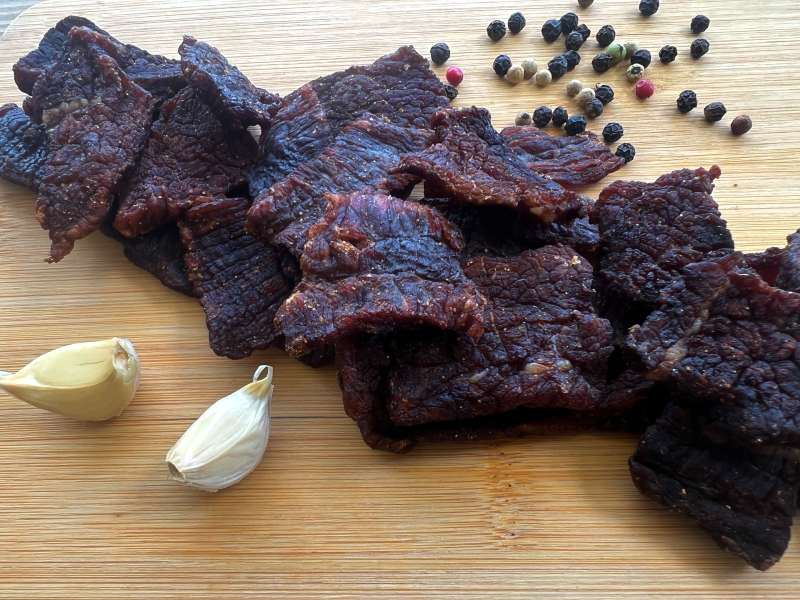
The Paleo diet has grown into fashion in recent years over concerns with obesity, heart disease, diabetes, and other ailments associated with our eating habits. In kind, many people are opting to cut processed foods out of their lives and switch to a more natural diet based on our ancestors’ eating habits.
Beef jerky should not be left out of the equation, as jerky was an essential part of the hunter-gather lifestyle in the Americas.
The Paleo beef jerky recipe is a refreshing change from the typical beef jerky you might be used to. The beef is marinated in various spices to give it a unique flavor. After the beef is marinated, it is then slow-cooked to perfection. This recipe is also very easy to follow and does not require any special equipment. All you need is a dehydrator and some common kitchen utensils.
Step 1: Select a Lean Meat
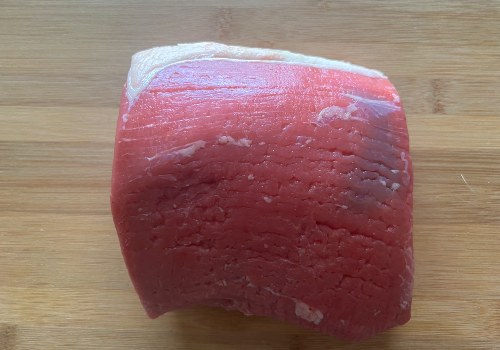
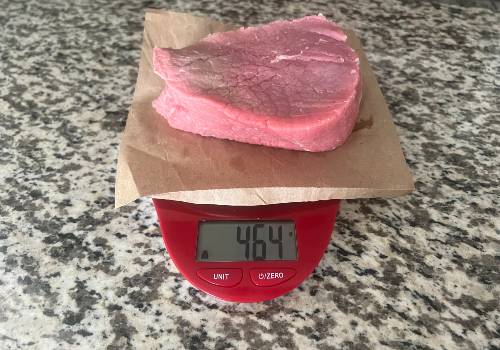
The following beef jerky recipe uses a food dehydrator to prepare the meat. Also, you should use the healthiest possible beef if you are choosing this recipe for health benefits. Grass-fed, organic cuts of beef work best: two and a half pounds of lean meat (either eye of round, London broil, flank steak, or ribeye are optimal).
Step 2: Slice the Meat
Although you can opt to use a meat slicer to ensure ¼ inch-thick slices of beef, this is an homage to our natural instincts, so better to use your hands. Actually, whatever you prefer and is easier for you will be fine.
Step 3: Store the Meat
As with any jerky recipe, storing the beef in the freezer for around an hour will help you to slice it in a more uniform fashion. It’s also easier on your hands.
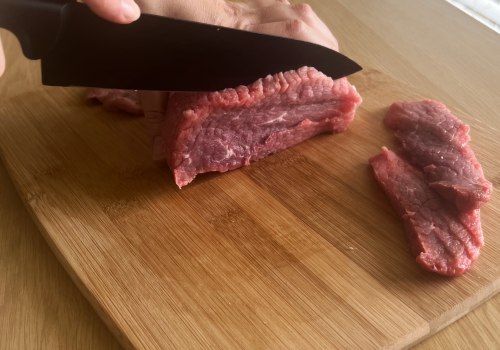
Once your meat is cut, you should place the strips into a container and set them aside.
Step 4: Prepare Your Marinade
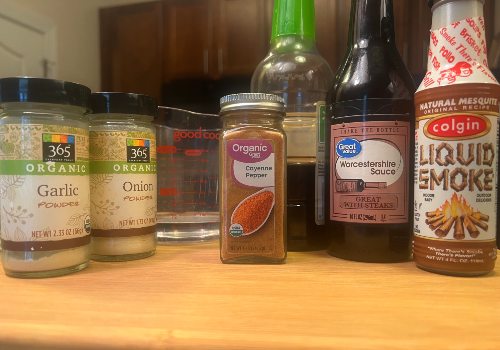
To prepare your marinade, place the following into a large, microwave-safe bowl and mix them well:
- 1 lb. of beef
- 1 tablespoon of liquid smoke
- 2/3 cup of tamari sauce
- 1/4 cup of Worcestershire sauce
- 1/3 cup of hot water
- 1/2 tablespoon of cayenne pepper
- 1 teaspoon garlic powder
- 1 teaspoon onion powder
Place the container in the microwave for a minute to let the flavors soak together.
Step 5: Mix the Meat with the Marinade
When your marinade is ready and out of the microwave, pour it onto the container with your beef strips and shake it thoroughly. Cover the bowl and place it into the fridge for a minimum of six hours (a full day if possible).
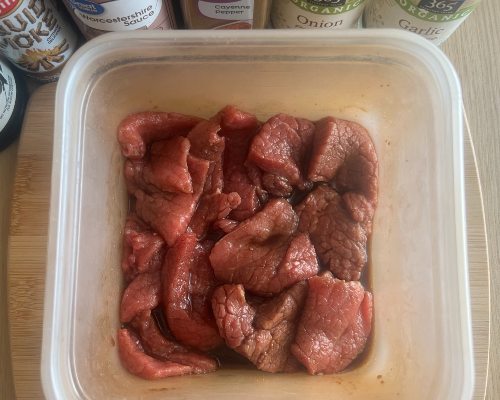
When your meat has been marinated, remove the bowl from the fridge and place the strips into a colander for rinsing. Use paper towels to remove all excess from the beef.
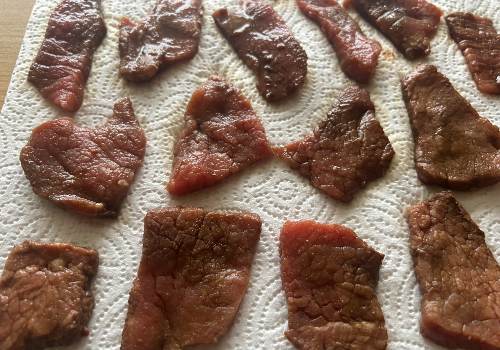
Step 6: Dry the Meat for Approximately 5 Hours
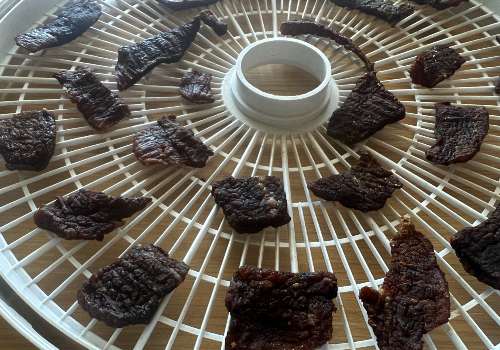
First, place the strips onto the machine’s racks, giving them adequate space between each other for air circulation. Then, sprinkle 2 tablespoons of cayenne pepper powder onto the meat for spice. If you don’t like spicy food, then you can use black pepper instead.
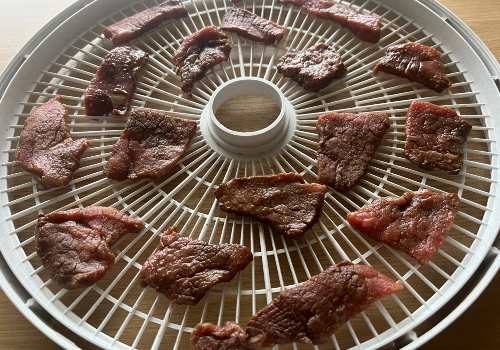
Set the dehydrator to 160° F and its timer to five hours.

- Dry your jerky evenly without the hassle of rotating trays.
- Keep your oven free for dinner while your next batch of jerky dries.
- Make a bigger jerky stash by expanding to twelve trays. Extra trays are sold separately.
Because all dehydrators are slightly different, the actual length of time will vary per model, so be sure to keep an eye on your jerky as it dries.
To test your jerky, bend it in half. If it cracks a bit, then it is ready. If it snaps, you overcooked it. Don’t fear, though, as even overcooked beef jerky can be delicious.
Step 7: Cool the Meat
When the meat is fully dry, leave the strips in a cool room to dry.
Storage
If you aren’t going to eat all the meat at once, store the finished beef jerky in a large Ziploc bag. You should cover the strips with a paper towel on both sides to absorb moisture that will spoil your meat. If you don’t plan on finishing them soon, you can place the Ziploc into the fridge.
Recipe
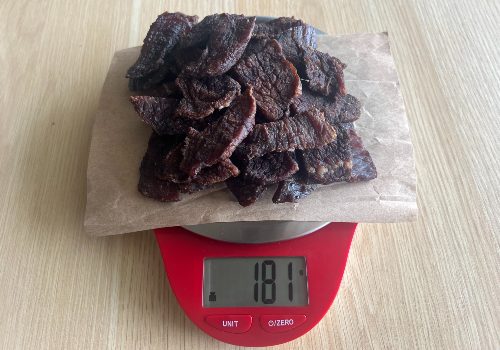
This recipe serves 5 people and requires me 13 hours and 30 minutes to make.
- preparation time: 30 minutes
- marinade time: 7 hours
- drying time: 5 hours
| Ingredients | Cost | |
|---|---|---|
| 1 lb. of beef; I choose eye of round beef, but any could work | $6.84 per 1 lb. at Walmart | |
| 1 tablespoon of liquid smoke | $1.34 for a 4 oz. container at Walmart (2 tbsp per one oz. means that 1 tablespoon equates to 0.17 cents) | |
| 2/3 cup of tamari sauce | $9 for a pack of 2 on Amazon (10 oz each) (1/4 cup or 2 oz. = 0.90 cents) | |
| 1/4 cup of Worcestershire sauce | $1.00 for a 10 oz. container at Walmart (1/4 cup or 2 oz. = 0.40 cents) | |
| 1/3 cup of hot water | free | |
| 1/2 tablespoon of cayenne pepper | $3.97 per a 1.7 oz. container at Walmart (6 tsp. per oz. means that 1/2 tsp equates to 0.20 cents) | |
| 1 teaspoon onion powder | Between $4 and $5 for a 1.73 oz. container (6 tsp. per oz. means that 1 teaspoon equates to 0.38 cents) | |
| 1 teaspoon garlic powder | Between $4 and $5 for a 2.33 oz. container (6 tsp. per oz. means that 1 teaspoon equates to 0.28 cents) | |
| Total Cost: | $9.17/6.4 oz. (full cost: meat + ingredients) |
Shot Instruction
Best Paleo Beef Jerky Recipe
The Paleo beef jerky recipe is a refreshing change from the typical beef jerky you might be used to. The beef is marinated in various spices to give it a unique flavor. After the beef is marinated, it is then slow-cooked to perfection.
Equipment


Ingredients
Instructions
- Store the beef in the freezer for around an hour will help you to slice it in a more uniform to ensure ¼-inch-thick slices of beef
- To prepare your marinade, place the ingredients in a microwave-safe bowl and mix them well
- Pour your marinade onto the container with your beef strips and shake it. After that, place it into the fridge for a minimum of six hours.
- When your meat has been marinated, use paper towels to remove all excess from the beef.
- Place the strips onto the machine’s racks, and sprinkle 2 tablespoons of red pepper flakes onto the meat
- Set the dehydrator to 160° F and its timer to five hours.
Nutrition
Serving: 36.2g | Calories: 196kcal | Carbohydrates: 5.5g | Protein: 29.7g | Fat: 5.8g | Saturated Fat: 2.2g | Cholesterol: 81mg | Sodium: 1110mg | Potassium: 387mg | Fiber: 0.2g | Sugar: 2.8g | Vitamin C: 5mg | Calcium: 12mg | Iron: 18mg
QUOTE:
"You might be a redneck if you think that beef jerky and moon pies are two of the major food groups."
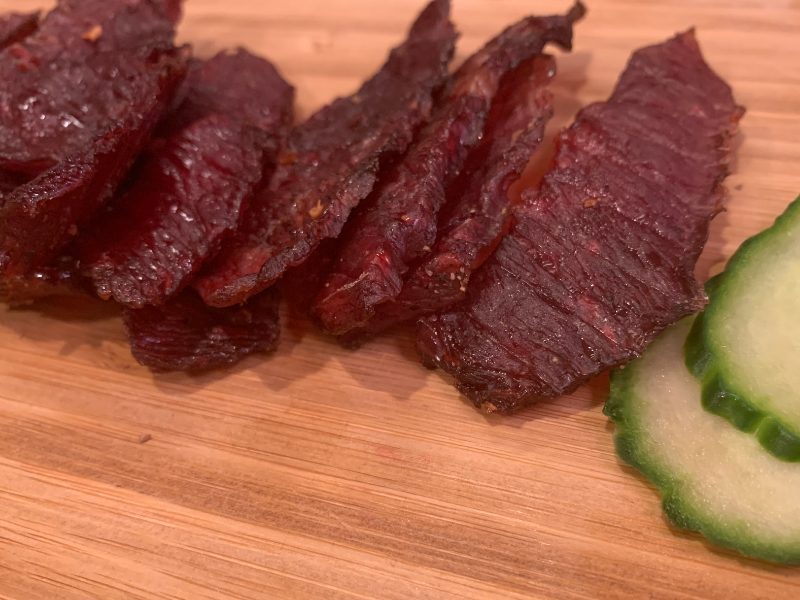
Keto Beef Jerky Recipe
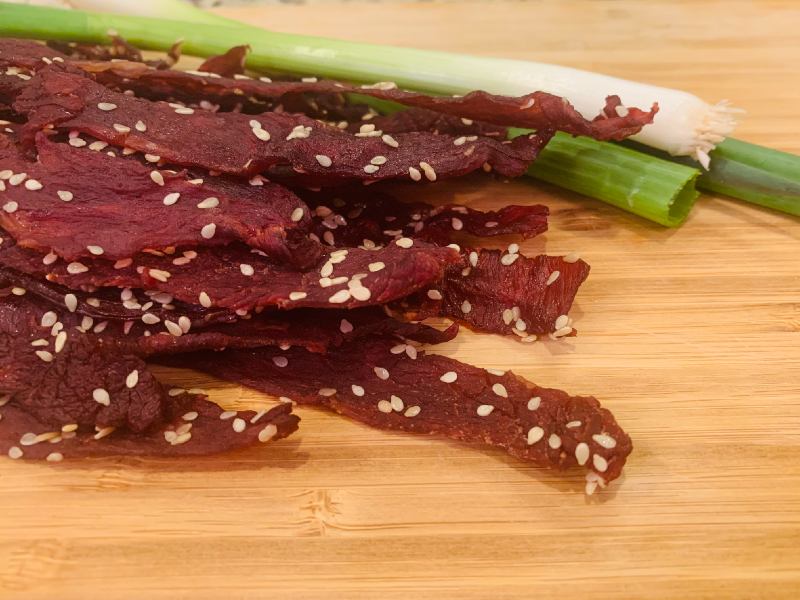
Real Healthy Beef Jerky Recipe
About the Author
Charles Joseph
In 2017, a good friend introduced me to the most amazing beef jerky I had ever tasted. And his source was from the most unexpected of places--a random guy in Thailand whom he had met while living there. Although I had been eating jerky since as far back as I could remember, I was genuinely blown away by the flavor. I realized the best beef jerky doesn't come from a store. This experience inspired me to create Beef Jerky Hub and put into writing all the things I've since learned about this amazing food. If you're interested, you can read more about my story here.